 Identifood

Our founder Ashleigh has eaten her way through over 40 countries, and her nut allergy means she reads every menu twice. She isn't vegetarian, but the same habit is what vegetarian food in Thailand asks of you: know what a dish usually holds, then ask. Meat is easy to spot. Fish sauce, shrimp paste and oyster sauce are not, and they hide in pastes, dressings and the wok.
A guide can't see the kitchen. This is what these dishes usually contain. Always ask, and carry your medicine.
Vegetarian Food in Thailand: Dishes That Can Fit
Of the ten dishes we cover, only one usually fits a vegetarian diet as it's normally made: mango sticky rice. Five more can fit when the cook makes them "jay", so vegetarian food in Thailand is mostly about that one word. Here are three to start with.
Usually fits: rice, coconut cream, mango
2Pad thaiAsk for it jay, without fish sauce or shrimp
3Green curryAsk for it jay; the paste has shrimp paste
Mango sticky rice is sweet glutinous rice soaked in salted coconut cream, served with ripe mango and crunchy mung beans. Street carts sell this vegetarian food in Thailand to take away.
Vegetarian Food in Thailand That Depends on the Kitchen
These five usually come with fish sauce or meat, but each can be made without.
Pad Thai: Fish Sauce and Dried Shrimp
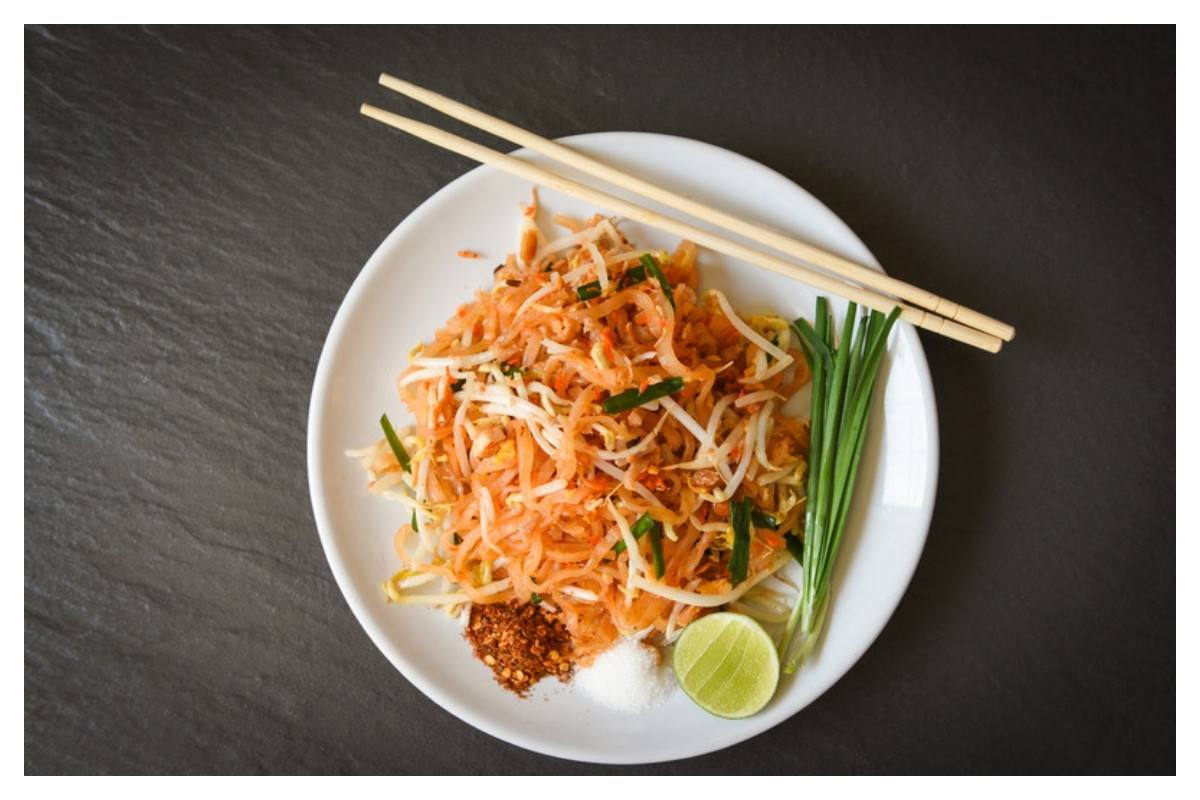
Pad thai is thin rice noodles stir-fried with egg, tofu, bean sprouts and tamarind, usually with shrimp or chicken. Fish sauce and dried shrimp are in it unless it's made jay, and the same wok cooks shrimp all day.
Som Tam: Ask for It Without
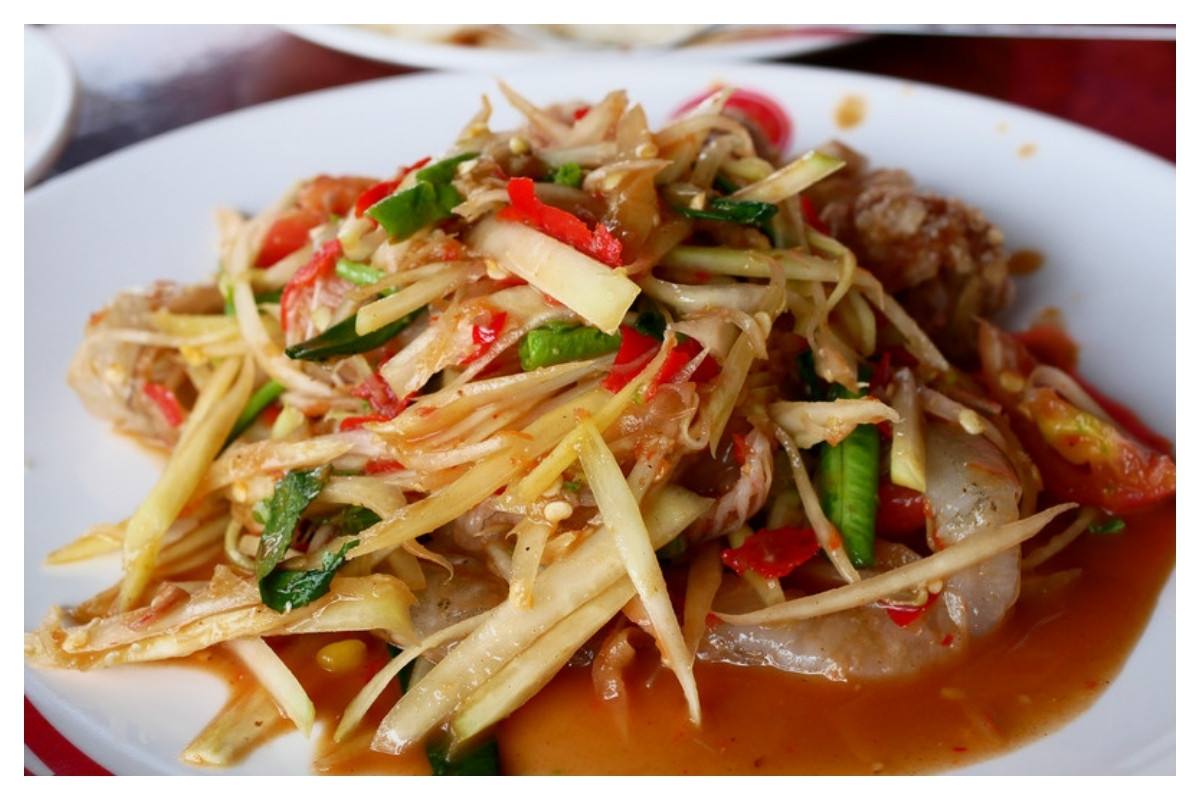
Som tam is green papaya pounded with chili, garlic, lime, fish sauce and palm sugar, often with dried shrimp. Ask for it without the fish sauce and shrimp. The same mortar pounds crab and fermented fish versions.
Green Curry: The Paste Is the Question
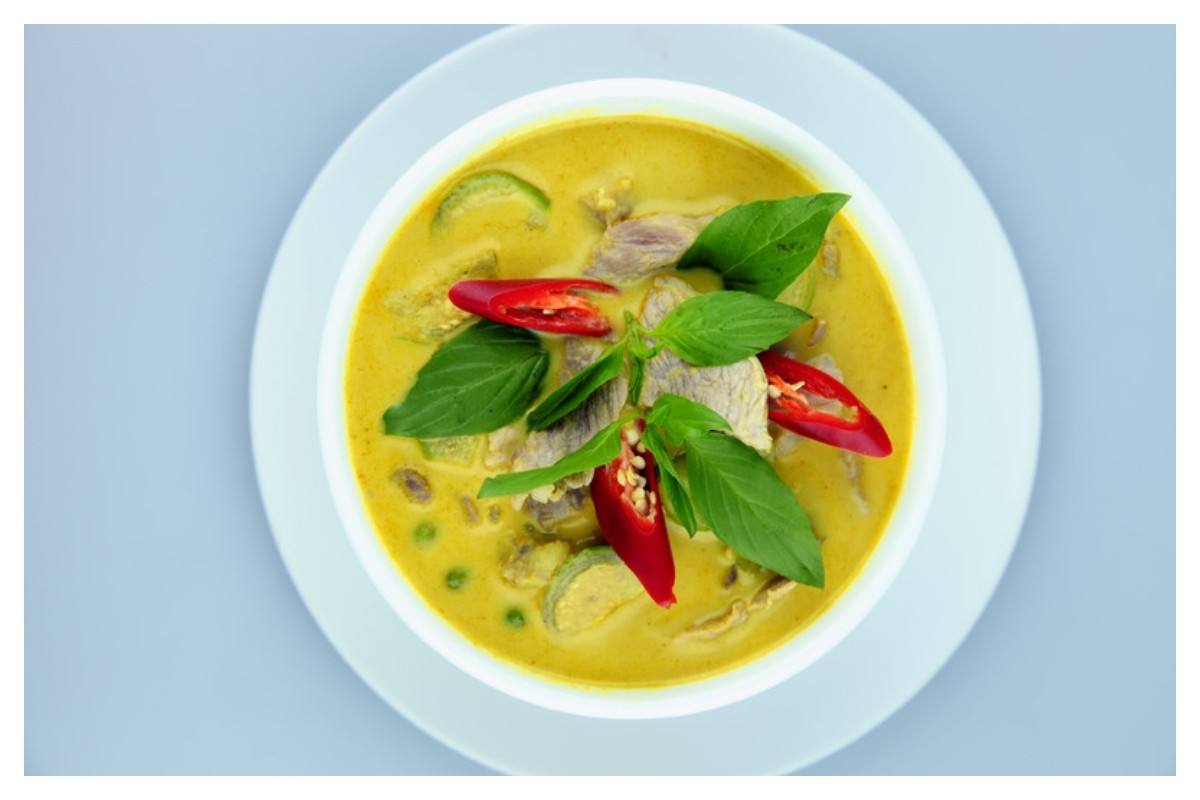
Green curry is chicken or beef in coconut milk with green chili paste, Thai eggplant and basil. The paste usually contains shrimp paste, and fish sauce goes in too. Vegetarian versions exist; ask for jay.
Khao Pad: A Simple Thai Vegetarian Swap
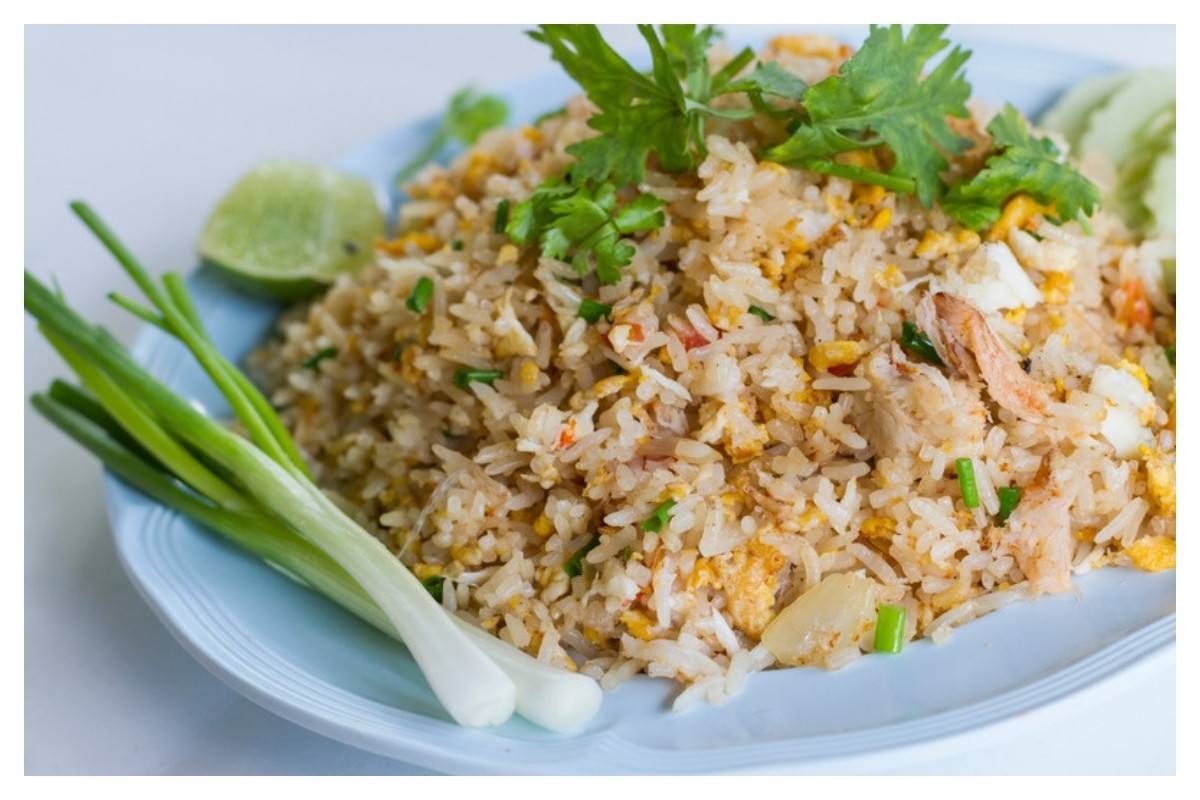
Khao pad is jasmine rice fried with egg, onion and garlic plus your choice of meat or shrimp. It's seasoned with fish sauce unless made jay, and the little bowl of chili fish sauce on the table is fish sauce too.
Pad See Ew: Oyster Sauce and Meat
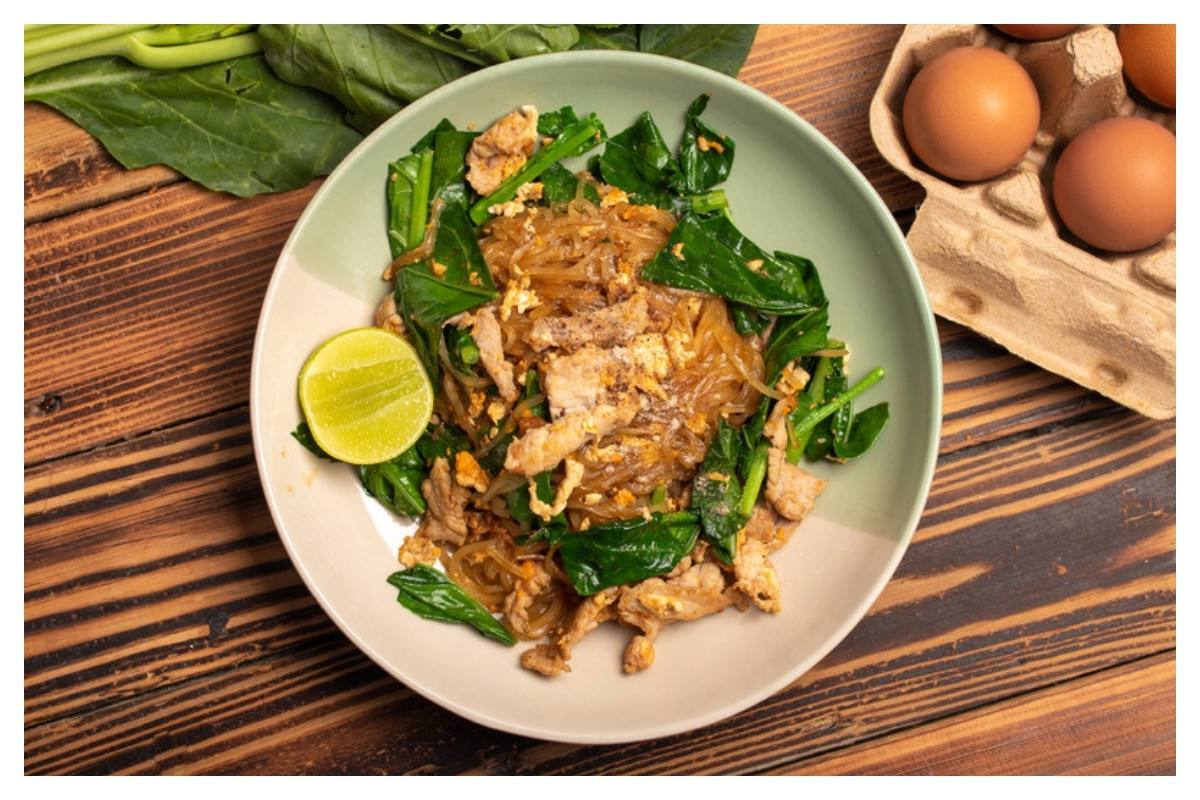
Pad see ew is wide rice noodles stir-fried with dark soy sauce, egg, Chinese broccoli and pork or chicken. Oyster sauce is part of it, so ask for it jay, without the meat.
What Usually Doesn't Fit Vegetarian Food in Thailand
Four of the ten usually don't fit:
- Tom yum goong: shrimp, fish sauce and shrimp paste in the broth.
- Pad kra pao: minced meat with fish sauce and oyster sauce.
- Massaman curry: meat, shrimp paste and fish sauce.
- Khao man gai: chicken, with rice cooked in chicken fat and stock.
How to Ask for Vegetarian Food in Thailand
"Jay" is the word to use: it's how a cook knows to leave out the fish sauce and shrimp. Say it, then show the card, so the shrimp paste in a curry and the oyster sauce in a stir-fry are covered too.
Identifood writes this card in the local language and keeps it on your phone, offline.
Get IdentifoodI can't eat meat, fish, fish sauce or shrimp paste, even a little.
Please don't add any, and use a clean pan, clean oil and clean utensils.
Quick tip: at "khao gaeng" shops you point at the curry pots and it comes over rice, so ask before you point, not after.
Vegetarian Food in Thailand, Jay and Delicious
Say jay, show your card, and start with pad thai, som tam and a plate of mango sticky rice. Vegetarian food in Thailand takes a question at every stall, and five of these classics can be made your way.
Next: browse every Thai dish we cover, or see how each one fits a vegetarian diet.