 Identifood

Our founder Ashleigh has a nut allergy and has eaten in over 40 countries, and small plates are often where the questions pile up. Rice, potatoes, eggs, seafood and olive oil give gluten free in Spain a good base. What catches people is bread: blended into soup, fried onto croquettes, set beside almost everything, and sometimes stirred into a sauce.
A guide can't see the kitchen. This is what these dishes usually contain. Always ask, and carry your medicine.
Gluten Free Spain: Bread in Disguise
We went through the ten dishes travelers order most in Spain. In these three, gluten is hard to see. They're the first tapas to ask about when you're eating gluten free in Spain.
Bread blended into the soup
2Patatas bravasSometimes flour in the sauce
3CroquetasFlour and breadcrumbs
Gazpacho: A Vegetable Soup With Bread Inside
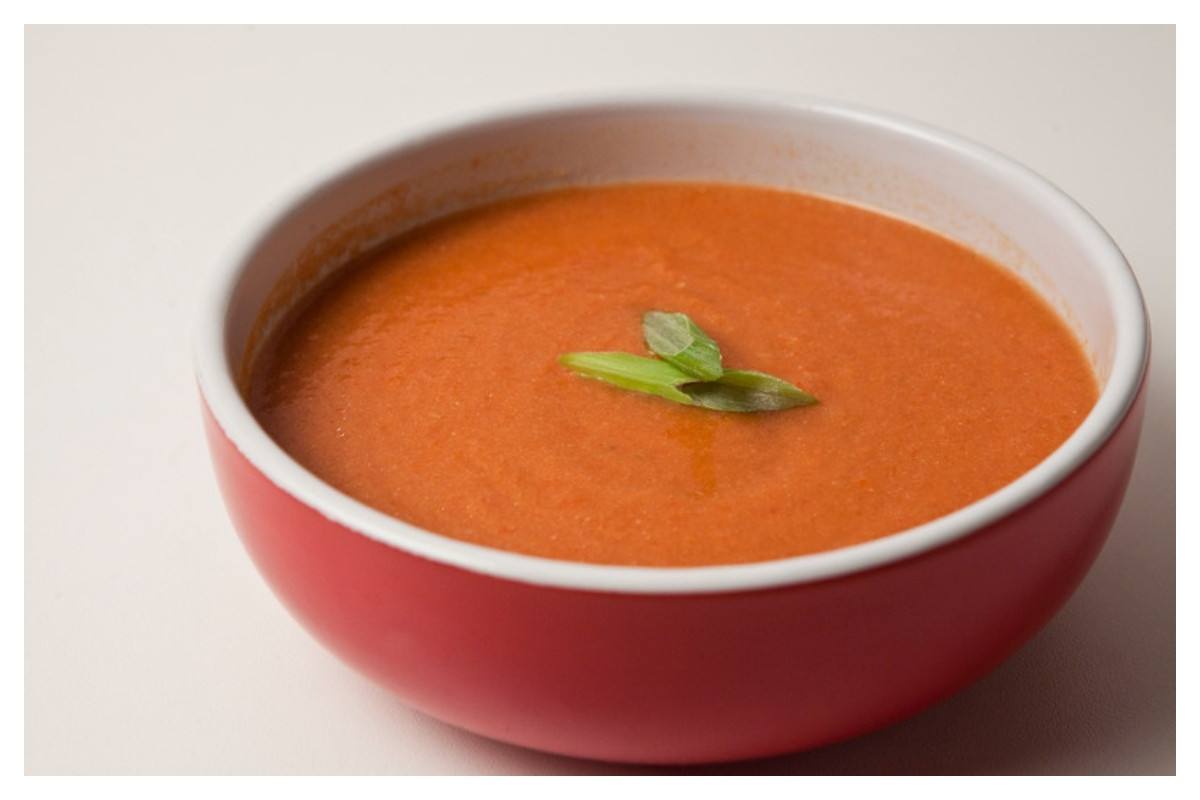
Gazpacho is a cold blended soup of ripe tomato, cucumber, pepper, garlic, olive oil and vinegar. Soaked bread is commonly blended in to thicken it, and croutons often go on top. Salmorejo, its thicker cousin, uses more bread. More in what's in gazpacho.
Patatas Bravas: Gluten in Some Brava Sauces
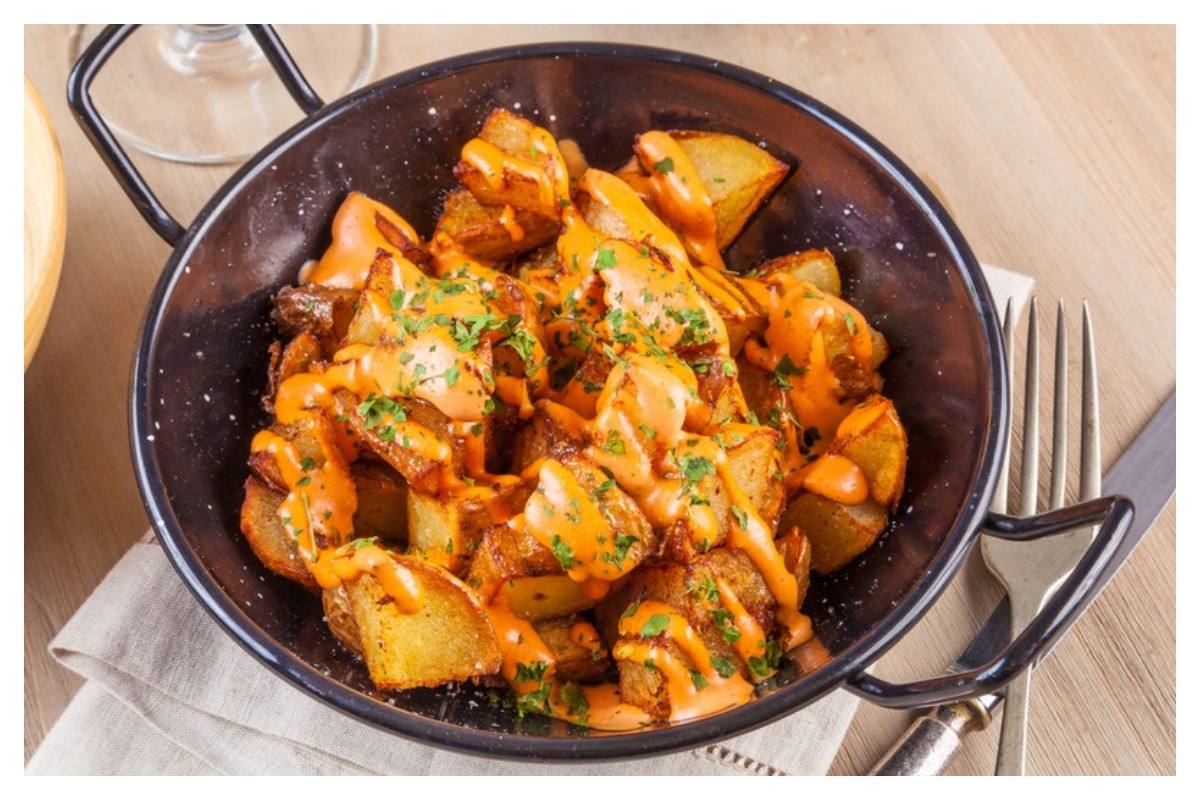
Patatas bravas are chunks of fried potato topped with a spicy tomato-paprika sauce and often a garlic mayonnaise. Some brava sauces are thickened with flour, using a roux, so ask how this kitchen makes it.
Croquetas: Gluten Inside and Out
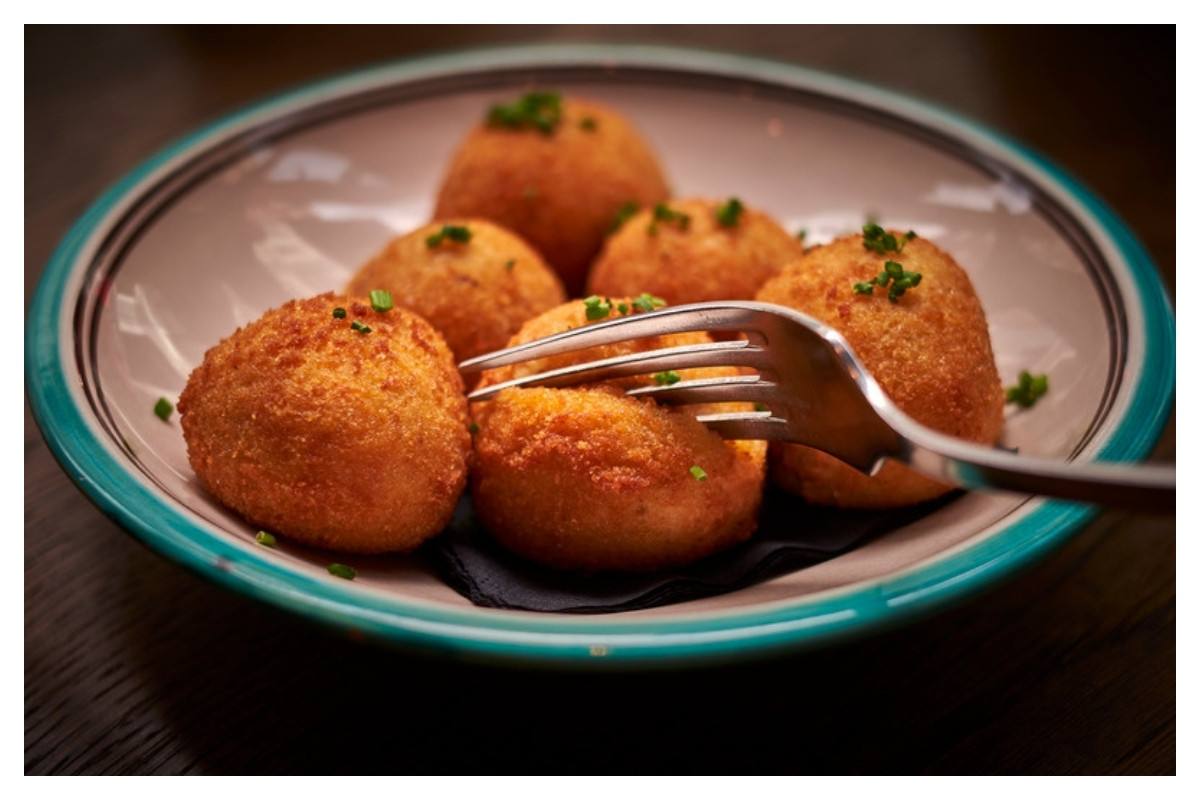
Croquetas are small fried croquettes of thick béchamel mixed with ham, chicken, cod or mushroom. The béchamel is made with wheat flour, then each one is rolled in egg and breadcrumbs and deep-fried.
Ordering Tapas Gluten Free in Spain
Start with the bread you can see. Tortilla española is often served as a bar pincho on a slice of baguette; ask for a wedge on a plate with a fork instead. Gambas al ajillo arrives with bread for the garlic oil, jamón ibérico often comes with pan con tomate or small breadsticks called picos, and pulpo a la gallega usually has bread alongside.
Then the bread you can't. Calamares fritos are coated in wheat flour, and in Madrid they come in a bocadillo roll as well. Churros are fried wheat dough.
Quick tip: ask “¿de qué son?”, what are they made of, when plates look alike. Then show a card for gluten free in Spain so the kitchen sees the bread and the flour too.
Identifood writes this card in the local language and keeps it on your phone, offline.
Get IdentifoodI can't eat gluten (wheat, barley or rye), even a little.
Please don't add any, and use a clean pan, clean oil and clean utensils.
Gluten Free Spain: Plates That Usually Skip It
Paella, short-grain rice cooked with saffron and stock in a wide pan, doesn't usually contain gluten. Tortilla española and pulpo a la gallega list gluten as not usual too, as long as the bread stays aside. Ask each time a plate arrives, and look through every Spanish dish and allergy.
The Shared Fryer and Gluten Free Spain
Tapas are shared, with toothpicks or forks, from small plates in the middle of the table. Much of what lands there is fried: calamares, croquetas and the potatoes for bravas. Shared fryer oil can carry gluten from a breaded croquette to a plain potato, so ask whether anything is fried on its own.
Paella is slower. Good paella is cooked to order and takes 20 to 30 minutes, and most places need two people. That wait gives you time to explain gluten free in Spain properly, before the rice goes in the pan.
Mornings belong to churrerías, busiest early and on weekends. The churros there are wheat dough fried in shared oil, so it's one to skip.
Last Words on Gluten Free Spain
Carry your medicine and your card to every meal. Ask about bread in the gazpacho, flour in the brava sauce and oil in the fryer, and move pinchos onto a plate. Tapas reward curiosity, and gluten free in Spain is mostly about asking one more question.
Planning more? See every Spanish dish we cover, or gluten in other countries' dishes.