 Identifood
Our founder Ashleigh has a nut allergy and has eaten her way through over 40 countries, so we know the feeling of not being sure what's in the bowl. Eating gluten free in Japan is mostly about one ingredient that turns up in more places than you'd guess: wheat, in noodles, batter, breadcrumbs and the soy sauce behind many glazes and broths.
A guide can't see the kitchen. This is what these dishes usually contain. Always ask, and carry your medicine.
Gluten Free Japan: Three Dishes Where Wheat Sits
Several of the ten Japanese dishes travelers order most commonly contain gluten. These three are the ones people meet first or expect least, so they're where gluten free in Japan starts.
In the noodles and the tare
2Zaru sobaMost soba is mixed with wheat
3TempuraIn the thin, crisp batter
Ramen: Wheat Noodles and a Soy-Based Tare
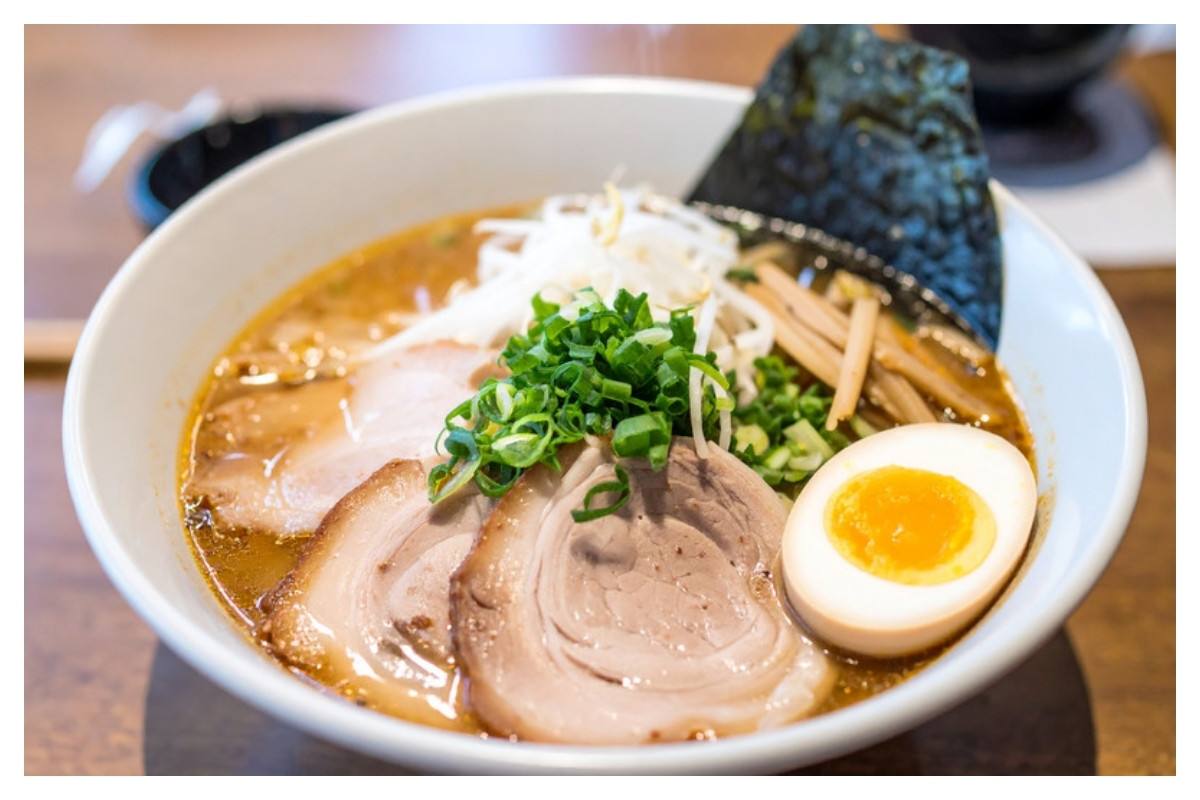
Ramen is wheat noodles in a pork, chicken, soy or miso broth, topped with sliced pork, a marinated egg, green onion and seaweed. The noodles are made with wheat flour and alkaline water, and the tare seasoning uses soy sauce, which contains wheat. Skip it rather than adjust it. More in what's in ramen.
Zaru Soba: The Buckwheat Noodle That Fools People
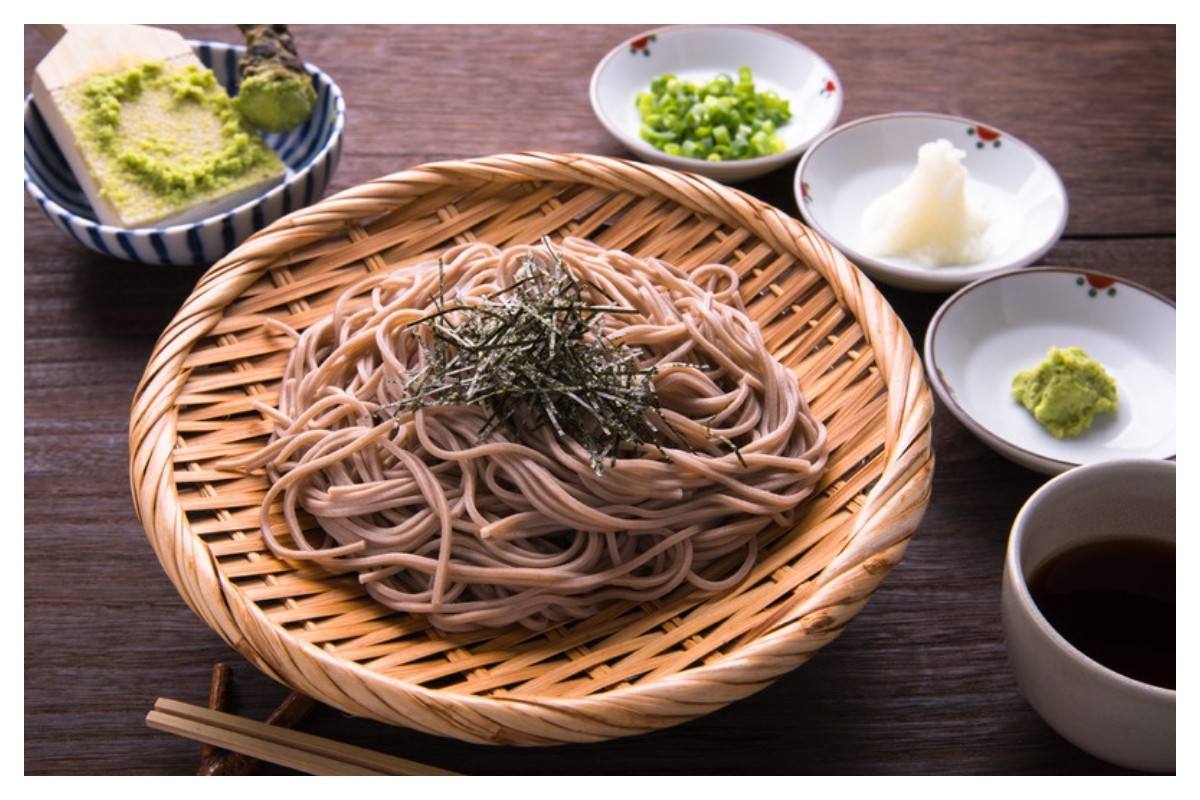
Zaru soba is chilled buckwheat noodles on a bamboo tray, dipped into a cold soy and fish-stock sauce. Buckwheat sounds like the answer to gluten free in Japan, but most soba is mixed with wheat flour, and the dipping sauce is soy-based. Quick tip: ask for “juwari”, which means one hundred percent buckwheat, and still ask about the sauce.
Tempura: Gluten in a Very Light Batter
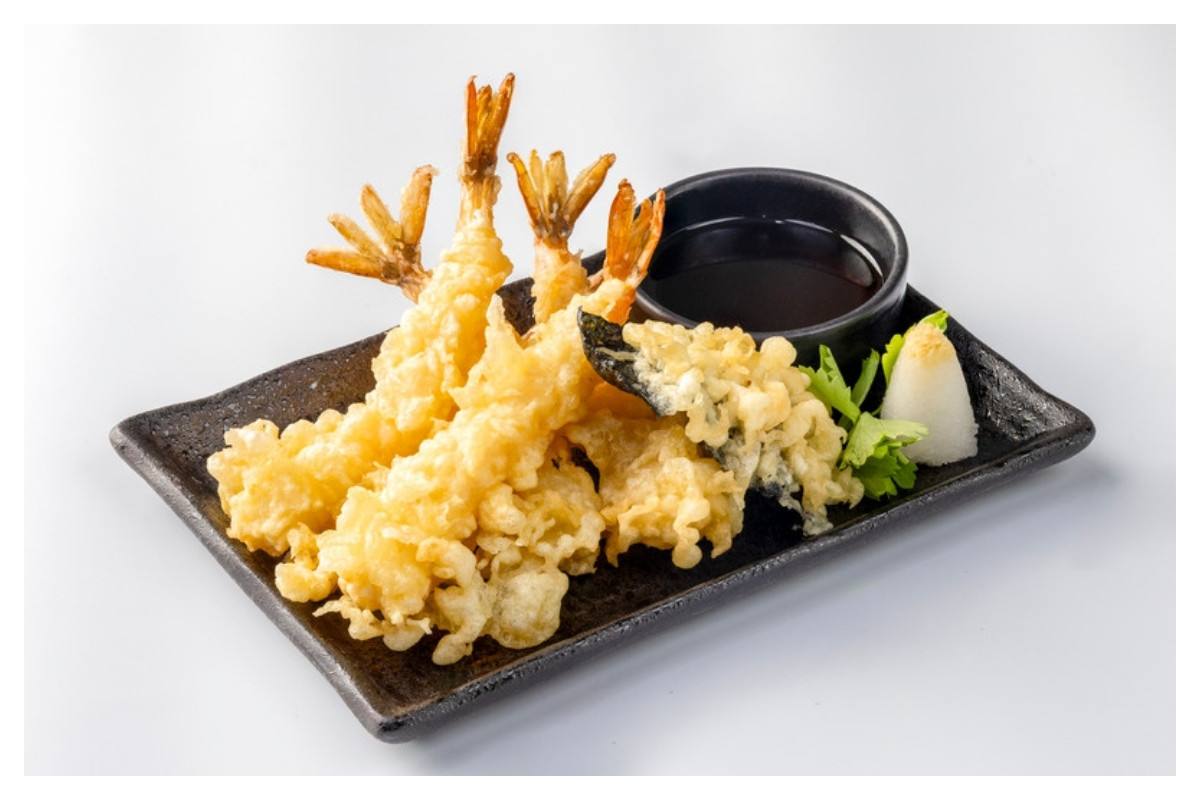
Tempura is shrimp, fish and vegetables dipped in a cold batter of wheat flour, egg and water, then fried briefly in hot oil. It looks delicate, but the coating is wheat. Tempura soba and udon put it on noodles too.
How to Explain Gluten Free in Japan
A few words from the menu help. At a yakitori bar, ask for “shio”, salt, instead of “tare”, the sweet soy glaze, which usually carries wheat. At a soba shop, “juwari” is the word for all-buckwheat noodles. Okonomiyaki and takoyaki both start with wheat batter, so leaving off a topping won't make them gluten free in Japan.
Then show it. Saying “no wheat” can sound like “no noodles” and nothing more. A card lets the cook read the whole thing, sauce included, at their own pace.
Identifood writes this card in the local language and keeps it on your phone, offline.
Get IdentifoodI can't eat gluten (wheat, barley or rye), even a little.
Please don't add any, and use a clean pan, clean oil and clean utensils.
Gluten Free Japan Picks: Not on the Usual List
Mochi, the chewy cake of pounded glutinous rice, doesn't usually contain gluten; “glutinous” here just means sticky. Sushi's rice, fish and vegetables don't list gluten either, but the dipping soy sauce contains wheat. Yakitori ordered “shio” skips the soy-wheat glaze. Gluten free in Japan still means asking, every time. Check every Japanese dish and allergy.
Gluten Free in Japan's Busy Noodle Shops
Noodle shops move fast. Udon is a cheap lunch at self-service chains and stations, and many ramen shops take orders at a ticket machine by the door, so ask before you buy the ticket, not after.
Then there's the water. A shop serving soba and udon may boil both in the same pot, and shared noodle water can carry gluten, so even juwari soba is worth a question.
Quick tip: if the answer is a shrug, choose a dish that doesn't start with noodles. Gluten free in Japan is easier with a second choice ready.
Making Gluten Free Japan Work at Every Meal
Carry your medicine and your card to every meal. Remember the three places wheat hides: noodles, batter and soy sauce. Say “shio” at the grill and “juwari” at the soba counter, and ask about the pot. Gluten free in Japan takes questions, and the food is worth every one.
Planning more? See every Japanese dish we cover, or dishes with gluten in other countries.