 Identifood


Our founder Ashleigh has eaten in over 40 countries, nut allergy and all, and Filipino cooking is a lesson in sour, salty and sweet. The famous food in the Philippines lives at home tables, canteens and fiestas: vinegar braises, sour soups, whole roast pig and a dessert whose name means "mix-mix". Almost everything comes with rice.
A guide can't see the kitchen. This is what these dishes usually contain. Always ask, and carry your medicine.
Famous Food in the Philippines: Three to Taste First
Ten dishes make up most of what travelers order. These three show the range of the famous food in the Philippines, from everyday lunch to a feast.
Adobo, the Filipino Staple
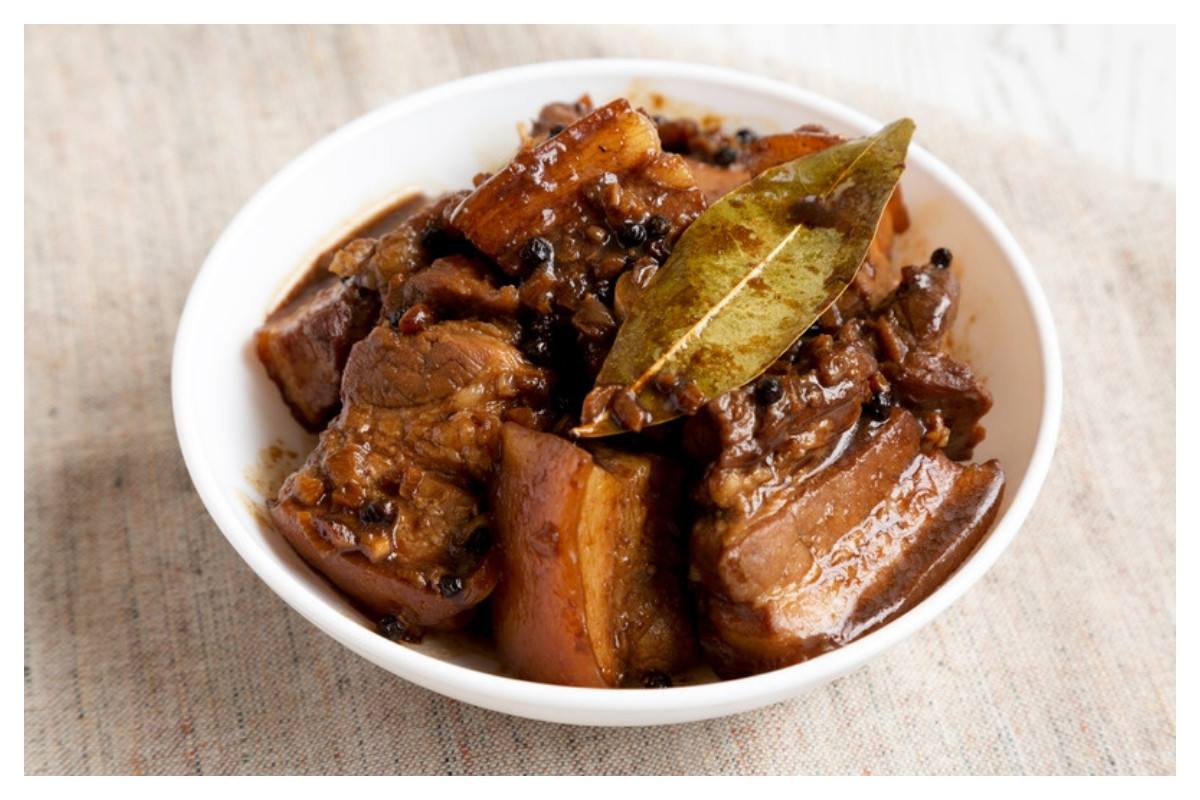
Chicken or pork braises in vinegar, soy sauce, garlic, bay leaves and pepper, then browns in its own fat. Spoon it over garlic rice at lunch or dinner. Adobong pusit swaps in squid cooked in its ink. The soy sauce usually contains wheat.
Sinigang, Filipino Comfort for Rainy Days
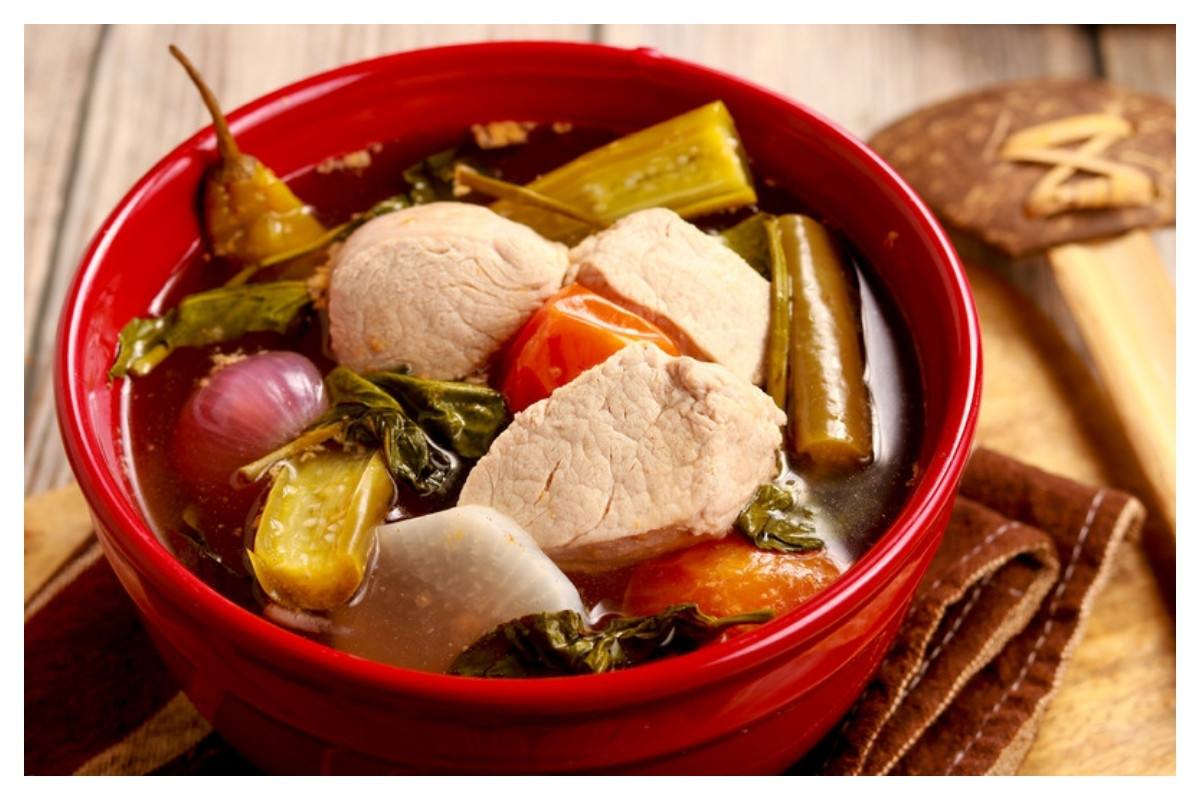
Tamarind sours a broth of pork, shrimp or fish with water spinach and radish. Pour it over rice, with fish sauce and chili alongside. Na baboy is pork; na hipon is shrimp; na bangus is milkfish. Ask which protein is in the pot.
Lechon, the Philippines' Feast Centerpiece
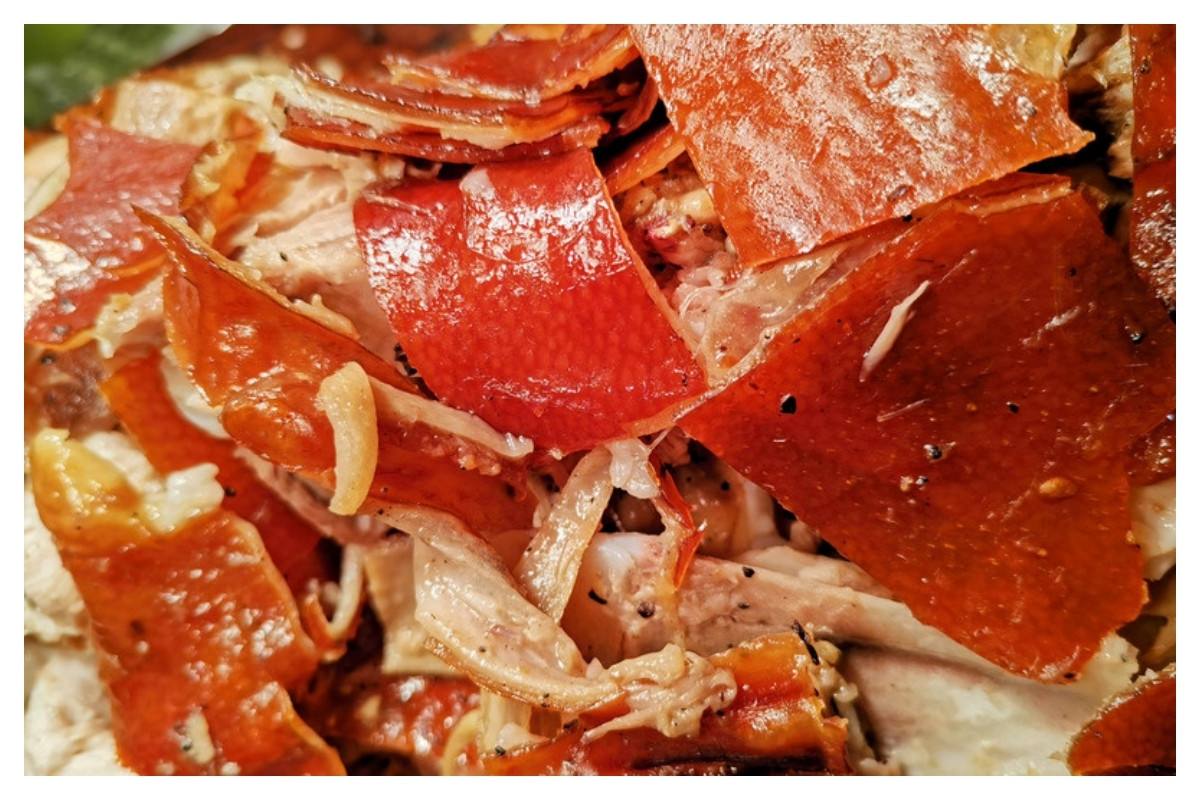
A whole pig stuffed with lemongrass and garlic turns for hours over hot coals until the skin is glassy. It arrives at fiestas, birthdays and Christmas. Cebu lechon is seasoned inside and eaten plain; Manila style leans on a sweet liver sauce thickened with breadcrumbs. Ask for the skin first.
Party Plates and Grills: More Famous Food in the Philippines
Kare-Kare, a Filipino Sunday Lunch
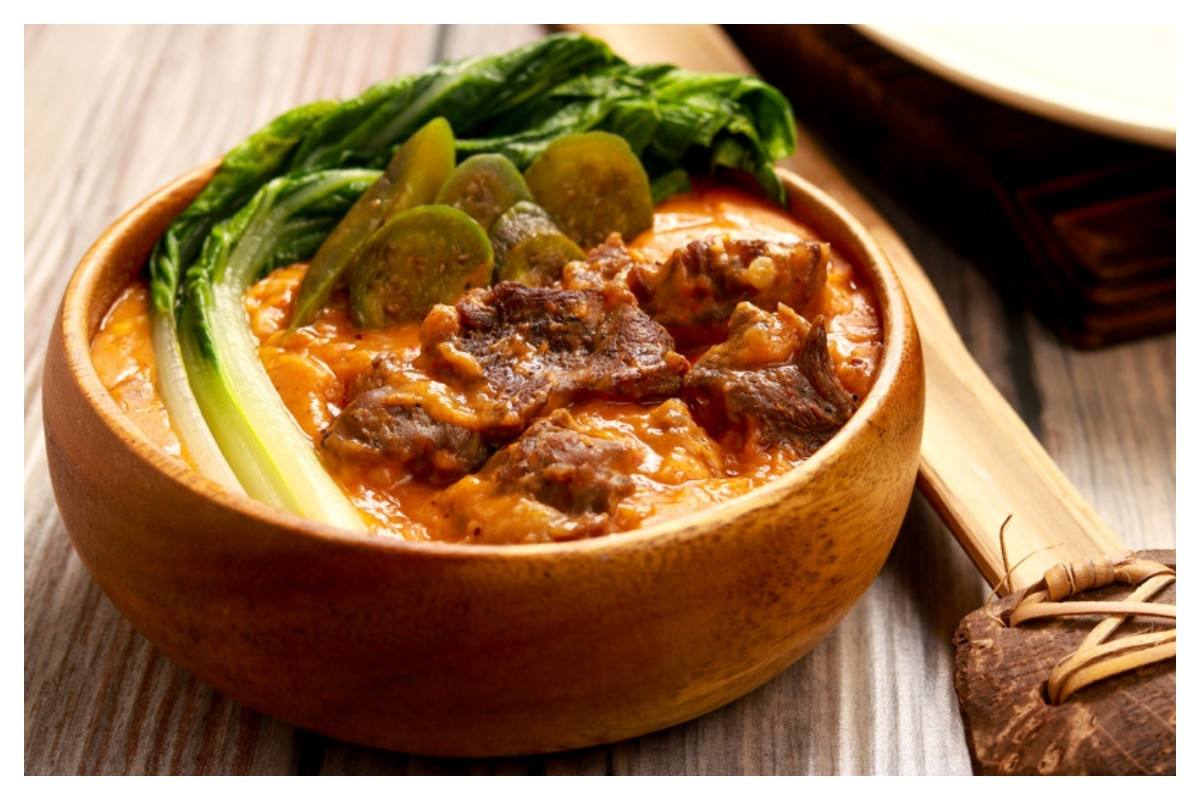
Oxtail, tripe and vegetables stew in a thick sauce of ground peanuts and toasted rice, with salty bagoong (shrimp paste) dabbed on each bite. Ask for the bagoong on the side.
Sisig, Sizzling Filipino Bar Food
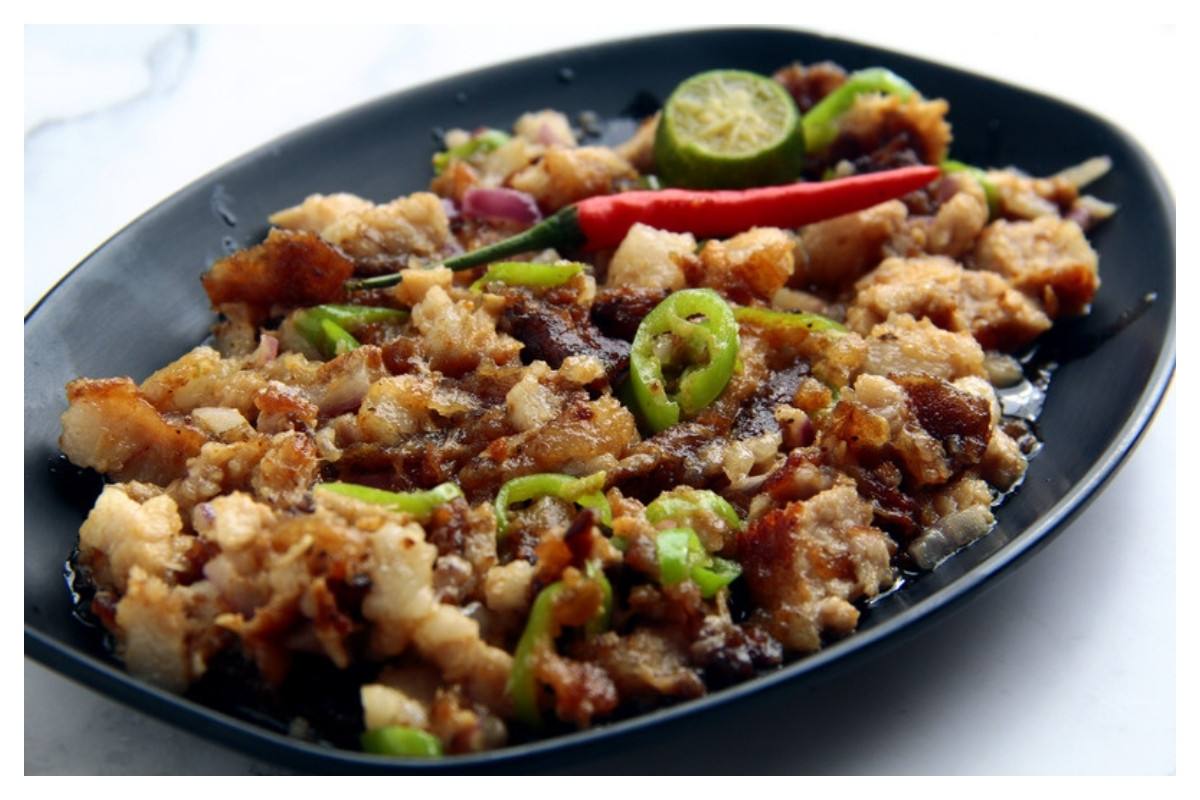
Chopped pork, crisp and sharp with calamansi, sizzles on a hot iron plate with an egg on top that you mix in at the table. It's pulutan, food for drinking nights. The Kapampangan original has no mayo; say "walang mayo".
Lumpia, Crisp Filipino Party Rolls
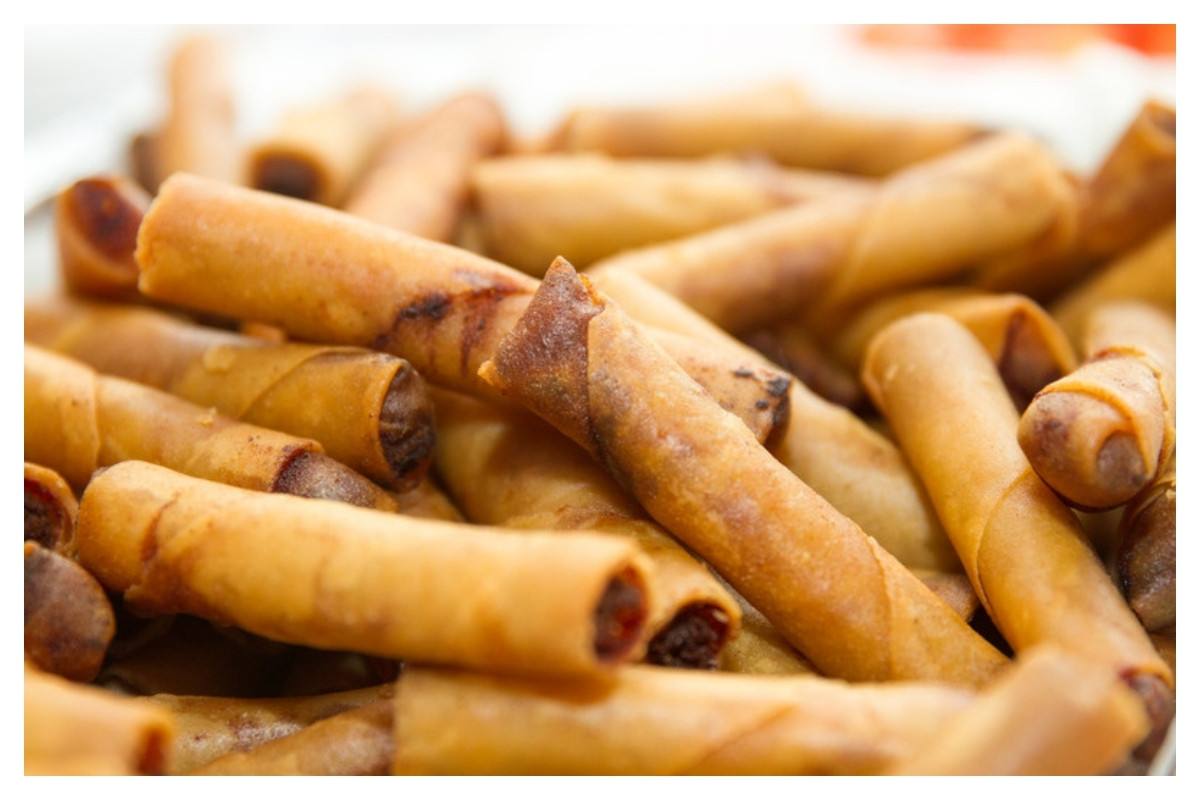
Lumpiang Shanghai wraps ground pork, carrot and onion in wheat pastry, fried golden for sweet chili or vinegar. Lumpiang sariwa is fresh, with a peanut-garlic sauce; turon is a banana version.
Pancit, Noodles for a Long Life
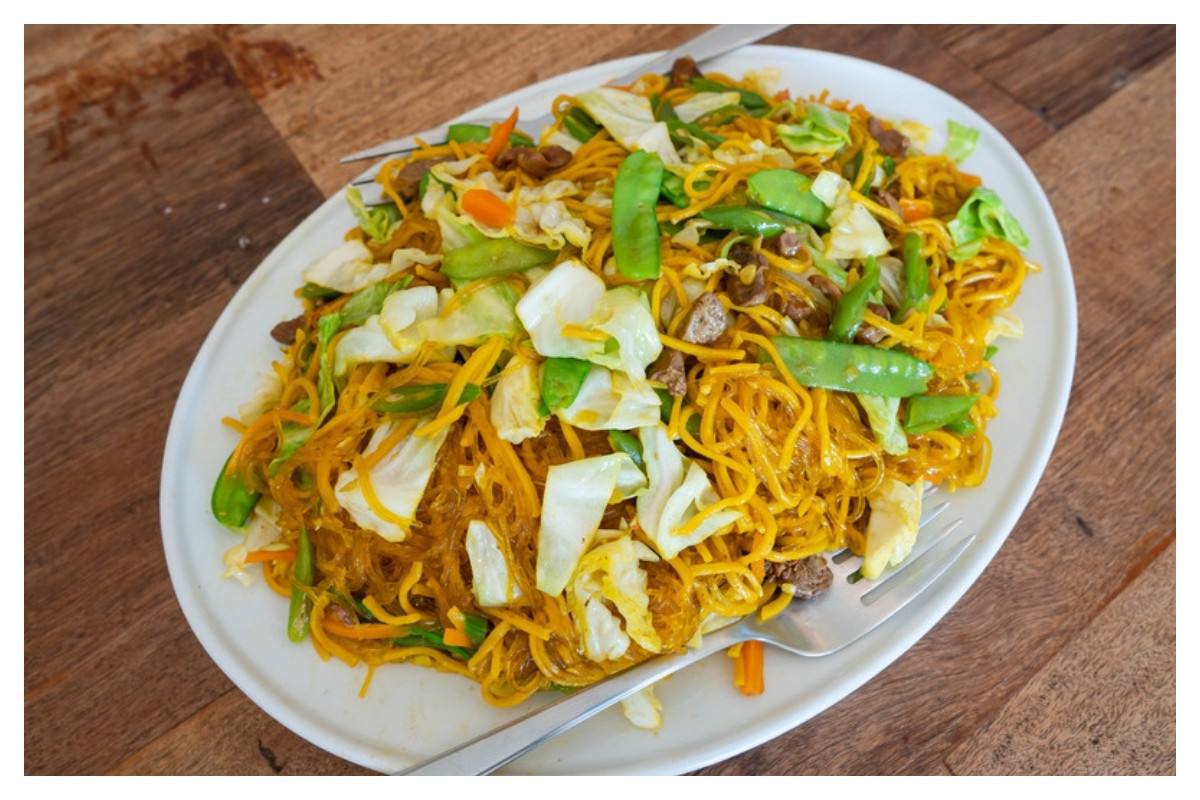
Noodles stir-fried with pork, chicken, shrimp and vegetables go on a shared platter at birthdays, for long life. Canton is wheat, bihon is rice, palabok has an orange shrimp sauce.
Chicken Inasal, Bacolod's Pride in the Philippines
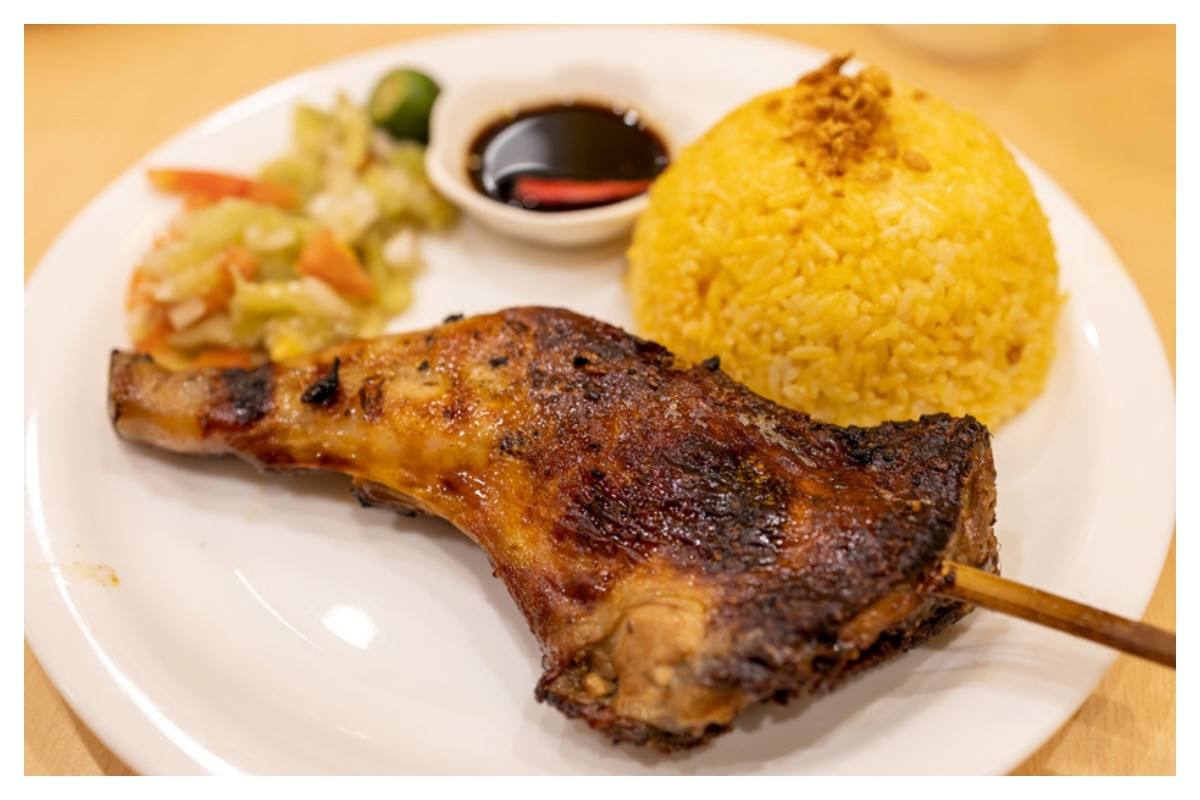
Chicken marinated in calamansi, vinegar, lemongrass and ginger grills over charcoal, basted with annatto oil. Order paa (leg) or pecho (breast), and pour a little chicken oil over your rice.
From Breakfast to Merienda: Famous Food in the Philippines
Tapsilog, the Filipino All-Day Breakfast
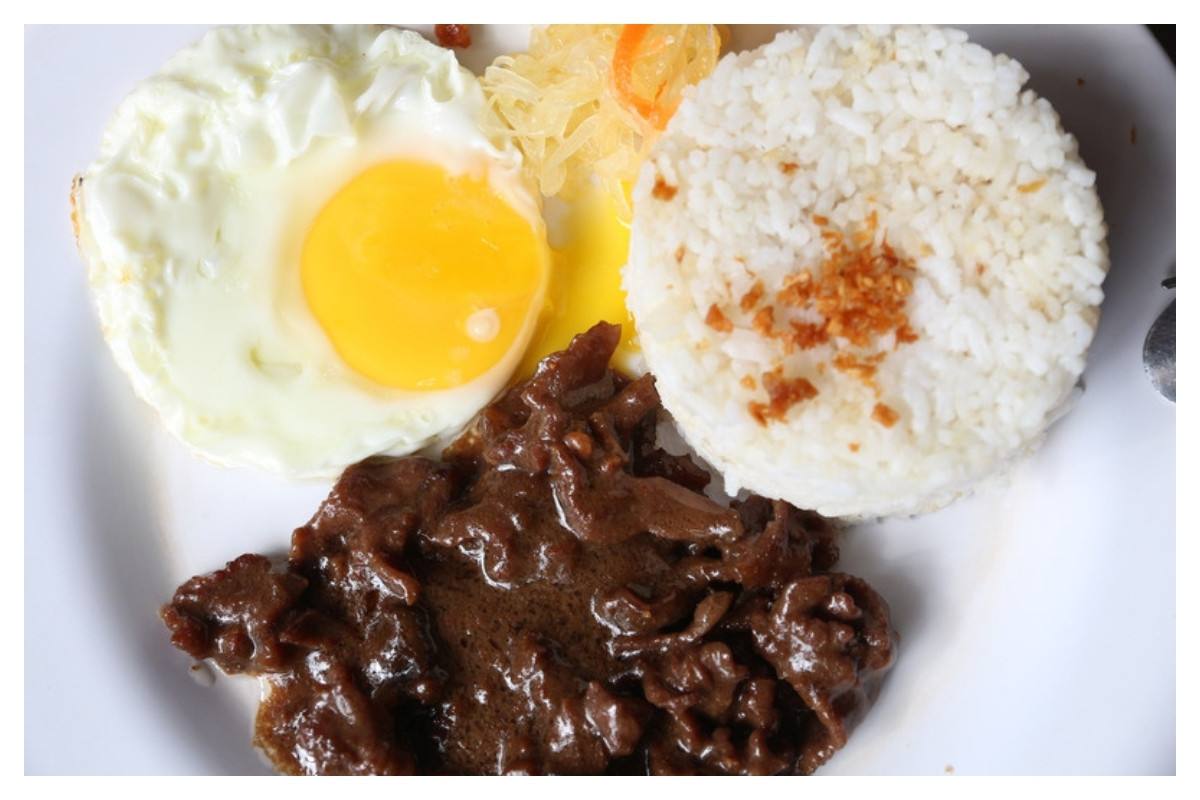
Cured beef, garlic fried rice and a fried egg share one plate, with spiced vinegar for dipping. The "-silog" ending means garlic rice and egg: longsilog brings sausage, tocilog sweet pork.
Halo-Halo, the Philippines' Hot-Season Dessert
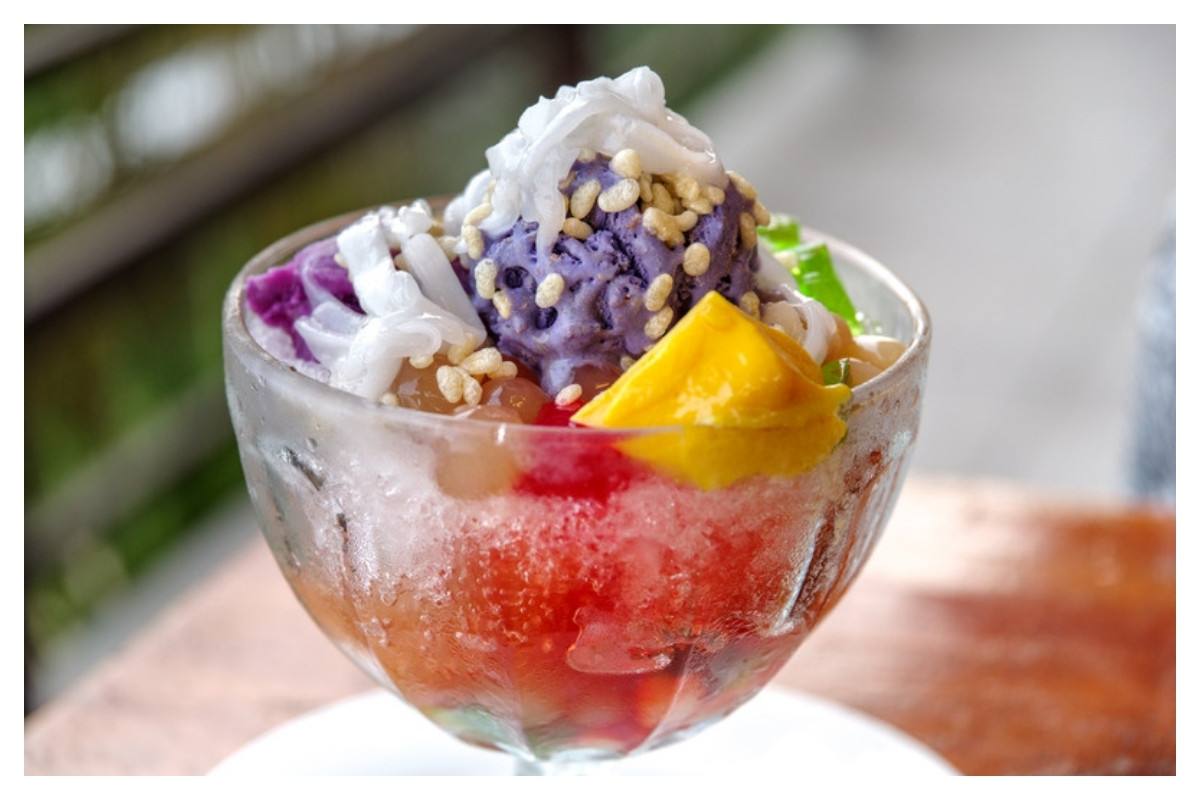
A tall glass layers sweet beans, fruit, jellies, ube and leche flan under shaved ice and evaporated milk. It's afternoon merienda. Stir everything first, then eat before it melts.
How to Order Famous Food in the Philippines
A few words carry you a long way. "Baboy ba ito?" checks whether something is pork. "Walang mayo" keeps mayonnaise off sisig. For pancit, ask for bihon if you want rice noodles, and with lumpia ask what's in the filling.
Quick tip: casual inasal spots often serve unlimited rice, so pace yourself with the famous food in the Philippines.
If you travel with a food allergy, you can check any dish in Identifood before you order.
Where to Begin With Famous Food in the Philippines
Tapsilog for breakfast, adobo for lunch, halo-halo in the hot afternoon, and lechon if you find a fiesta. That's the famous food in the Philippines, one plate of rice at a time.
Keep going with every Filipino dish we cover, or read our gluten-free guide to the Philippines.